


Mice are one of the most common and persistent pest problems in New Jersey homes and businesses. What makes them especially challenging is how quietly they enter, reproduce, and spread throughout a property before most people even realize there’s an issue.
If you’ve seen signs of mice or heard activity behind walls, it’s important to understand how infestations start and what it takes to fully eliminate them.
How Mice Get Inside Your Home
Mice don’t need much space to enter a property. In fact, they can squeeze through openings as small as a nickel .
Common entry points include:
- Cracks in foundations
- Gaps around doors and windows
- Utility openings for plumbing or wiring
- Roof vents, soffits, and crawl spaces
- Tree branches or pipes leading to the home
Once inside, mice travel through walls, ceilings, and floors, searching for food and nesting areas.
Why Mice Are a Serious Problem
Mice are more than just a nuisance. Their behavior creates both health and structural risks over time.
Health Risks
- Spread bacteria through droppings and urine
- Contaminate food and surfaces
- Known carriers of diseases such as:
- Hantavirus
- Salmonella
- LCMV
Property Damage
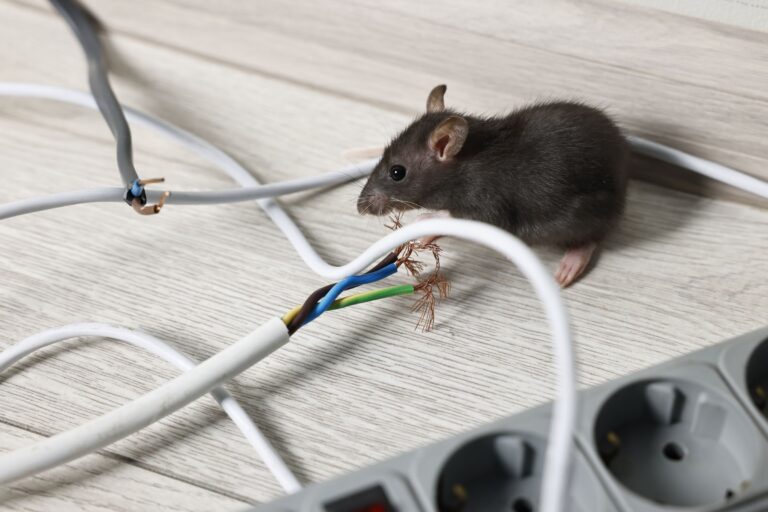
- Chewing through wires, increasing fire risk
- Damaging insulation and drywall
- Contaminating storage areas and pantries
Because their teeth never stop growing, mice constantly chew, even when food is available .

Signs You Have a Mouse Infestation
Mice are rarely seen during the day, so noticing even one mouse usually means there are more present .
Look for these common signs:
- Droppings in kitchens, pantries, or hidden areas
- Scratching, squeaking, or movement in walls
- Chew marks on wood, wires, or packaging
- Footprints or grease marks along baseboards
- Actual sightings, especially at night
If mice are visible, the infestation is already established.
What Mice Are Doing Inside Your Home
Understanding mouse behavior helps explain why infestations grow quickly.
Inside your home, mice are:
- Building nests in warm, hidden areas
- Searching constantly for food and water
- Reproducing rapidly
- Expanding their territory through walls and floors
They tend to gather in areas like:
- Behind appliances
- Inside cabinets or pantries
- Near water heaters
- In attics and basements
How Professional Mice Control Works
Eliminating mice requires more than setting traps. Effective control focuses on removal, access prevention, and long-term monitoring.
Step 1: Full Property Inspection
A technician identifies:
- Entry points
- Nesting areas
- Level of infestation
Step 2: Targeted Removal
Depending on the situation:
- Strategic trap placement
- Baiting systems where appropriate
- Monitoring activity zones
Step 3: Sealing Entry Points (Critical Step)
Without closing access points, mice will return.
This includes:
- Sealing cracks and structural gaps
- Reinforcing vulnerable areas
- Blocking hidden entry pathways
Step 4: Ongoing Prevention
Long-term protection often includes:
- Routine inspections
- Adjustments based on activity
- Preventative treatments
Many homeowners rely on ongoing pest control programs to keep rodent activity under control year-round.
Commercial Mouse Solutions

Residential Mouse Solutions

Why DIY Mouse Control Often Fails
While traps and store-bought solutions can catch individual mice, they rarely solve the full problem.
Common challenges include:
- Missing hidden nesting areas
- Not addressing entry points
- Underestimating population size
- Temporary results with recurring infestations
For more complete protection, combining strategies with pest control services ensures the issue is addressed at its source.
How to Prevent Mice in Your Home
Preventing mice starts with limiting access and removing attractants.
Key steps include:
- Sealing gaps and entry points
- Storing food in airtight containers
- Fixing leaks and moisture issues
- Reducing clutter and nesting areas
- Keeping exterior areas clean
Homes dealing with repeated pest issues may benefit from broader residential pest control services to maintain protection.
Mice in Homes vs Businesses
Rodent problems affect different properties in different ways.
For homeowners:
- Food contamination
- Noise and stress
- Damage to walls and wiring
For businesses:
- Health code violations
- Product contamination
- Reputation damage
For commercial environments, integrated solutions like commercial pest control are often necessary.
When to Call a Professional for Mice
You should take action immediately if:
- You see a mouse inside your home
- You hear activity in walls or ceilings
- Droppings are present
- DIY methods aren’t working
- The issue keeps returning
Mice reproduce quickly, so delaying treatment allows the infestation to grow.
If you suspect a mouse problem, the next step is to contact us for an inspection and customized solution.
Professional Mice Control in New Jersey
Mice infestations rarely go away on their own. Addressing the issue early helps prevent damage, reduce health risks, and avoid larger infestations.
For a thorough inspection and effective removal plan, contact us today.